Welcome
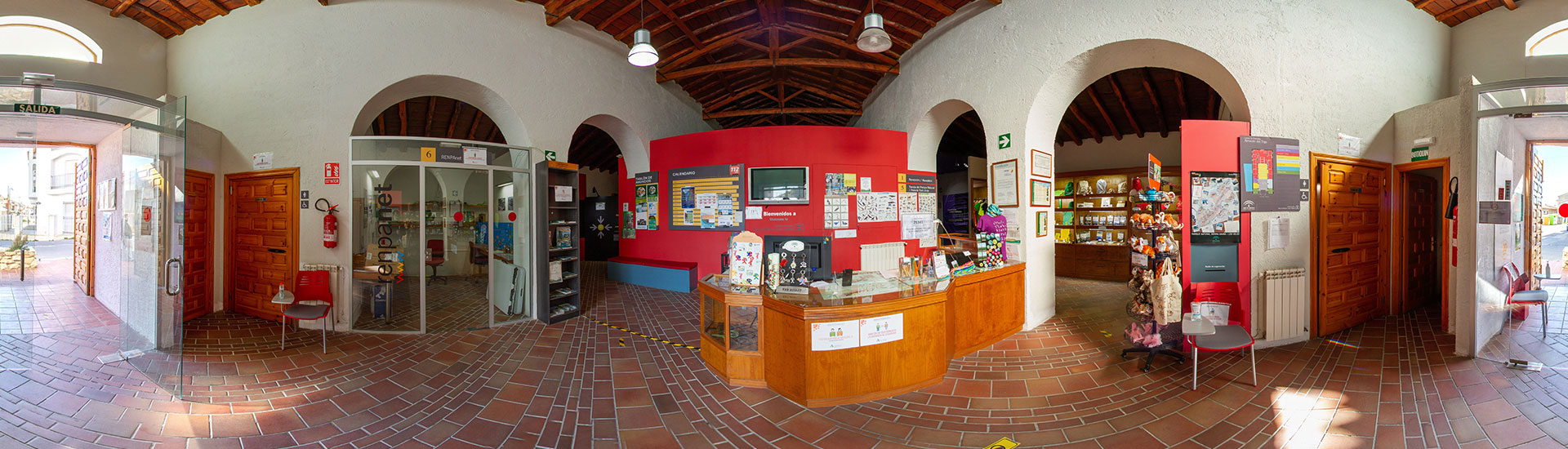
Welcome to the Virtual Tour of the Almacén de Trigo Visitor Centre, located in the Sierra María - Los Vélez Nature Reserve in the province of Almeria. Here you’ll be able to discover the treasures of this Nature Reserve, which forms part of the Network of Protected Natural Areas of Andalusia (RENPA).
At the centre you’ll find a reception area where visitors are welcomed, a gift shop where you have the opportunity to purchase products connected with the surrounding area, and a zone with information about the Network of Protected Natural Areas of Andalusia (RENPA), all together in a central space. The building also has a room for meetings, exhibitions and events, which is also where a video on the treasures of the Natural Area is screened.
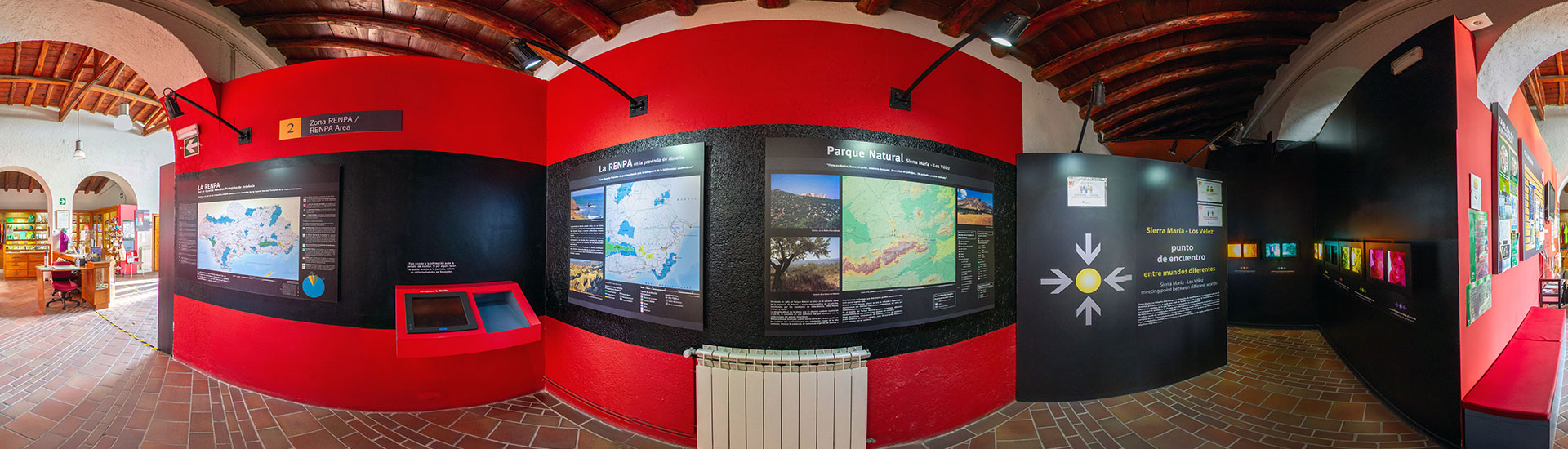
This Nature Reserve is spread over the municipalities of Vélez-Blanco, Vélez Rubio, Chirivel and María. With some peaks rising to more than 2,000 m, the spectacular mountain scenery contrasts with the arid landscapes typical of Almeria. Splendid forests and traditional crops provide a great diversity of habitats that are home to a rich and varied fauna, especially butterflies and birds. The flora of the Reserve is extremely diverse; there are numerous endemic species, some of which are found only in this Reserve. In addition to this enormous natural wealth, there’s also a substantial archaeological and cultural heritage, evidenced by various prehistoric settlements and cave art that shows how important the Nature Reserve and its surroundings were for primitive human beings.
aIn these links you can find more information about this Protected Natural Area with downloadable material such as trails, opening hours, how to get there, map with all the facilities for public use, etc.
Visit Center Almacén de Trigo: lajunta.es/3sq8x
Sierra María-Los Vélez Natural Park: lajunta.es/3ozoi
Complete your visit with ecotourism experiences with local companies. You can consult the offer in the following link: ecoturismoandaluz.com
For activities aimed at the educational community, associations of people with functional diversity and local population, you can access through the link: reservatuvisita.ecoturismoandaluz.com
Cultures that have left their mark
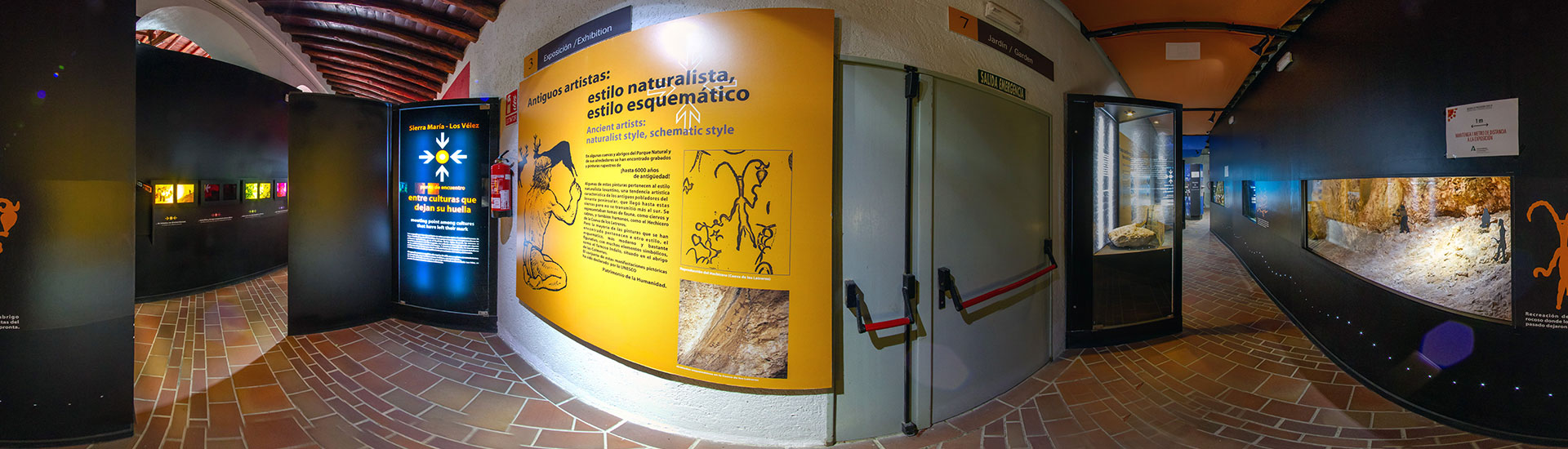
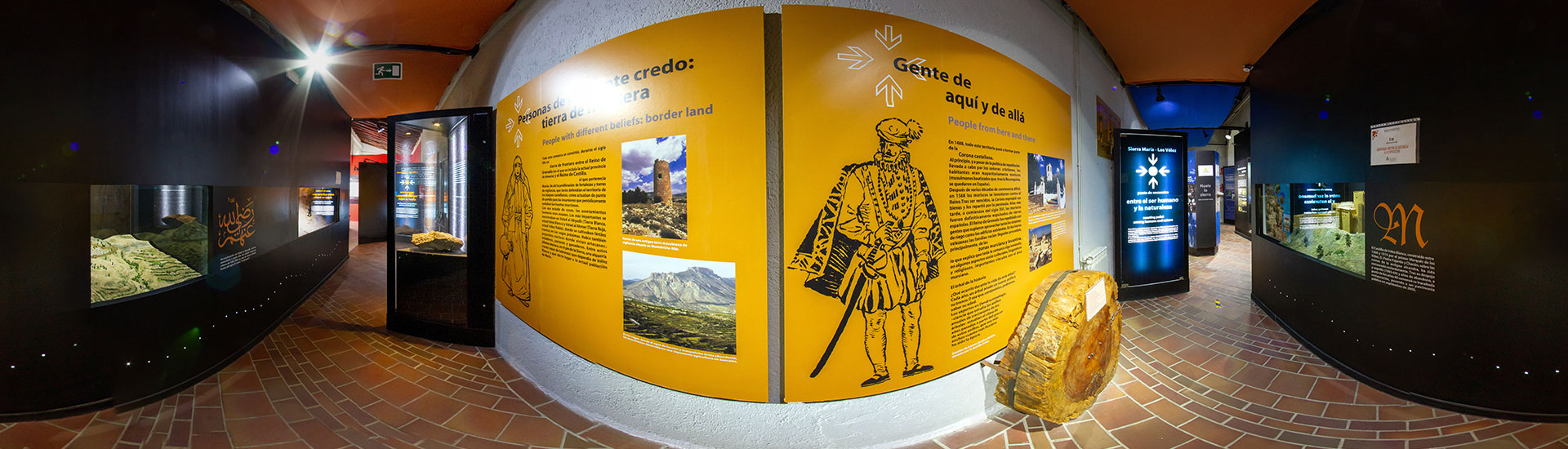
Archaeologists have discovered remains of human activity dating back to the Palaeolithic period in this area. Since those distant times, and up until the present day, different civilisations have followed on from each other: Neolithic farmers, Romans, Moors, and after the Kingdom of Granada fell to Castile, peoples from the north and east of the peninsula. Groups of people came from different places, bringing with them their culture, knowledge, technology, art and customs. In Sierra María Los Vélez, the traces they left behind blend into a single, complex reality.
In addition to the graphic material, in this section you can see a Visigothic stele and realistic models of relics from other cultures, dating from different periods of history: cave paintings from more than 18,000 years ago, from Moorish Vélez Blanco, and from the castle from medieval times. There is also a section of tree trunk, a sort of 'biological clock', which references some of the historical events of the last few centuries.
Between human beings and nature
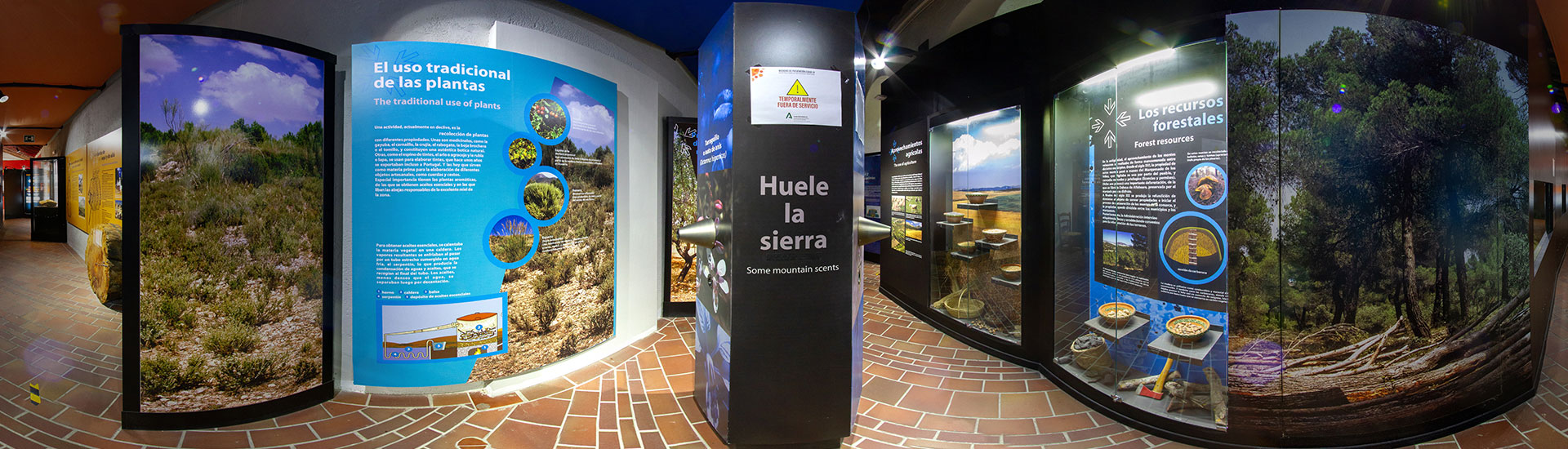
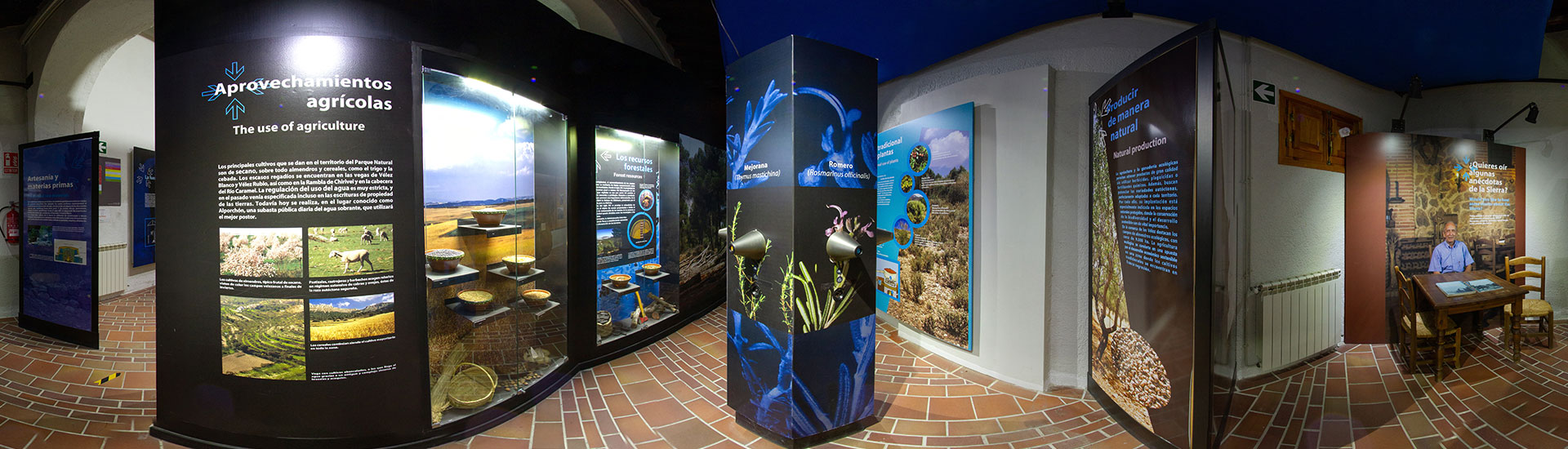
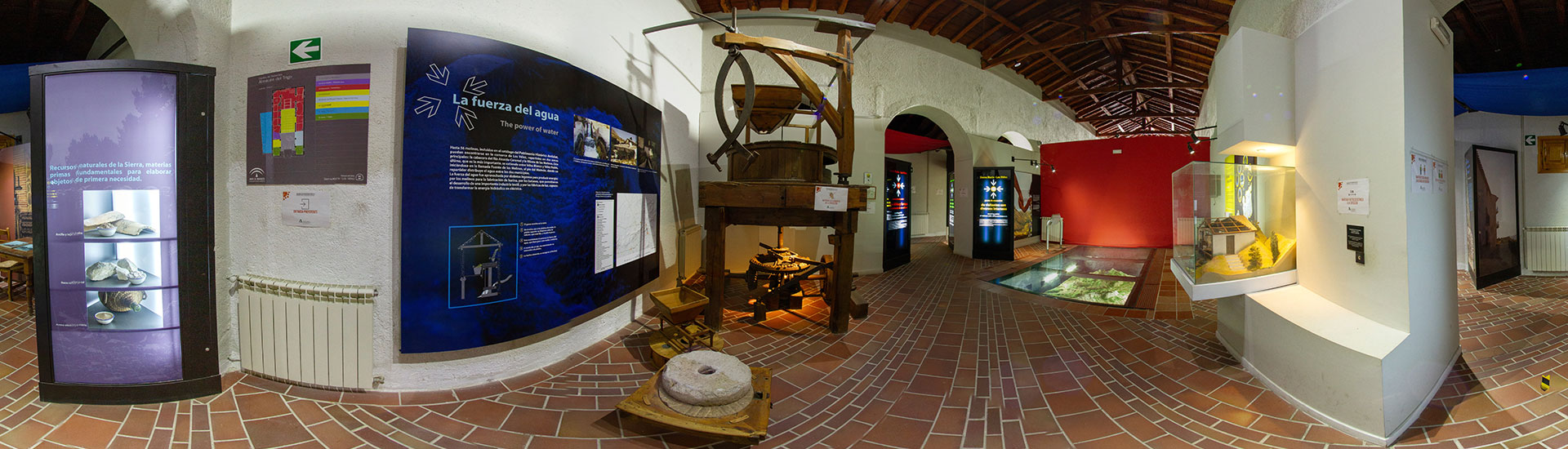
These riches have always been used in an intelligent way, which would now be defined as sustainable use. For this reason, a well-preserved natural environment has survived to the present day, worthy of being declared a Nature Reserve. In this area there are examples of these resources and how they have been transformed into items of use to humans: coal, firewood, Arabic tiles, glass, agricultural and livestock products. You can also observe the workings of an old mill, and operate a model of a flour mill. What's more, the voice of one of the local inhabitants tells the story of life in these mountains.
Visitors and their interests
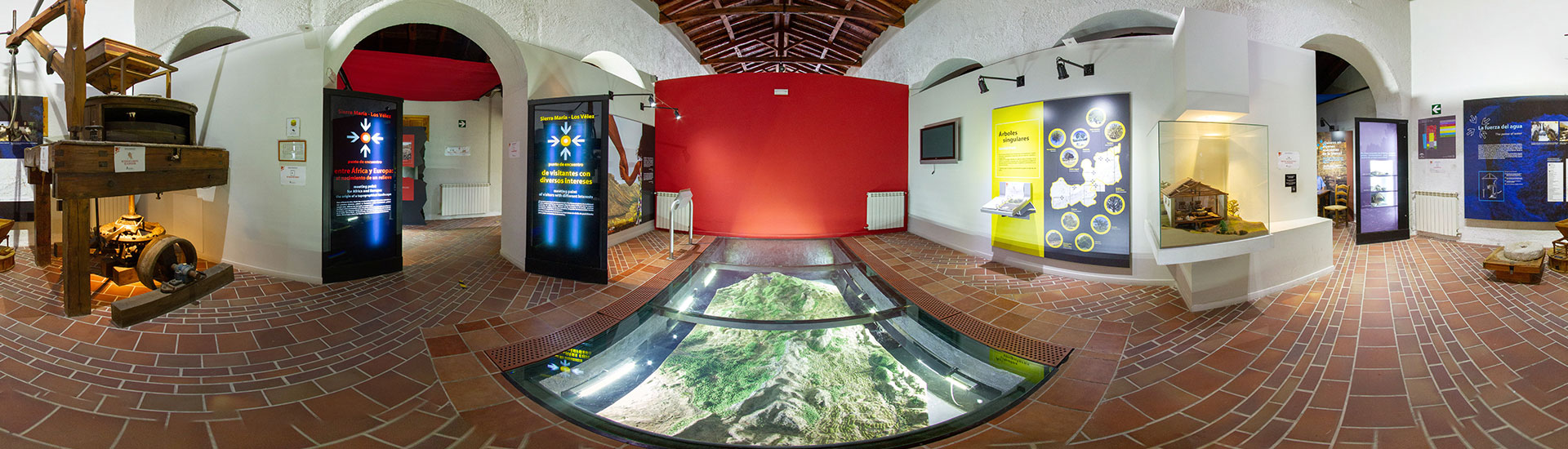
Nature, art, folk festivals and traditions, villages, mountains and landscape, recreational areas, hiking, photography, churches and chapels, and traditional dishes prepared with the best produce from the area. The Nature Reserve and its surroundings offer a host of possibilities for unforgettable experiences. A large interactive model of the Nature Reserve allows you to locate the most interesting sites, and see images of them on a screen. There's also a book on the trees unique to these mountain ranges, which allows you to learn more about some of them, as well as providing information on where they can be found.
Between Africa and Europe, the birth of a mountain range

Millions of years ago, what is today the Nature Reserve was covered by an ancient ocean. So how were these mountains formed? Where did this steep, rugged landscape come from? Its origins lie in the collision of two tectonic plates, the African and the European, which smashed together giving rise to the different mountain ranges in this area: in the west, Sierra María, perfectly aligned from east to west; and in the east, Gabar, Sierra Larga and Sierra del Gigante, facing slightly to the north. Rock and fossil samples that reveal the geological history of the Sierra, a computer animation showing the changes in relief, and models explaining the erosion of the rocks are among the exhibits in this part of the exhibition.
Among living things of different provenance

Where might the Spanish juniper, a species typical of inland areas of the Iberian Peninsula, the mountain pine and juniper forest typical of the Baetic System, and the esparto grass typical of the semi-arid south-east coincide? Where can high-mountain broom, Portuguese oaks that favour humid environments, and Mediterranean forest be found in close proximity to each other? In the Sierra María Los Vélez Nature Reserve, a meeting point for species with very different origins and needs. You'll find lots of features to help you learn more about the natural ecosystems of these mountain ranges and their flora and fauna: displays for discovering unique species (endemic plants); sound recordings of birdsong; pine cones, acorns and other plant material; the remains of food and animal droppings; an interactive module that will allow you to learn about how plants adapt to different environments.
For travellers from all over the world

At the crossroads between the Meseta, the Levante and the Baetic System, the Los Vélez region has welcomed a great many travellers from all around the world over the course of its history. People who migrated in search of new lands, warriors who conquered new territories for their lords, engineers who opened up new communication routes, and also the scientists and scholars who have described the undisputed merits of these lands in their works. Today, many travellers come to visit the region and the Nature Reserve from other places, sometimes even establishing strong ties and cooperation links. They contribute to the fact that this territory remains a meeting point of people and cultures. A good example of this is the twinning of the Sierra María Los Vélez Nature Reserve with the Altmühltal Nature Park in Bavaria.