



BIOBANK OF THE VIRGEN DEL ROCIO UNIVERSITY HOSPITAL-IBiS

Location
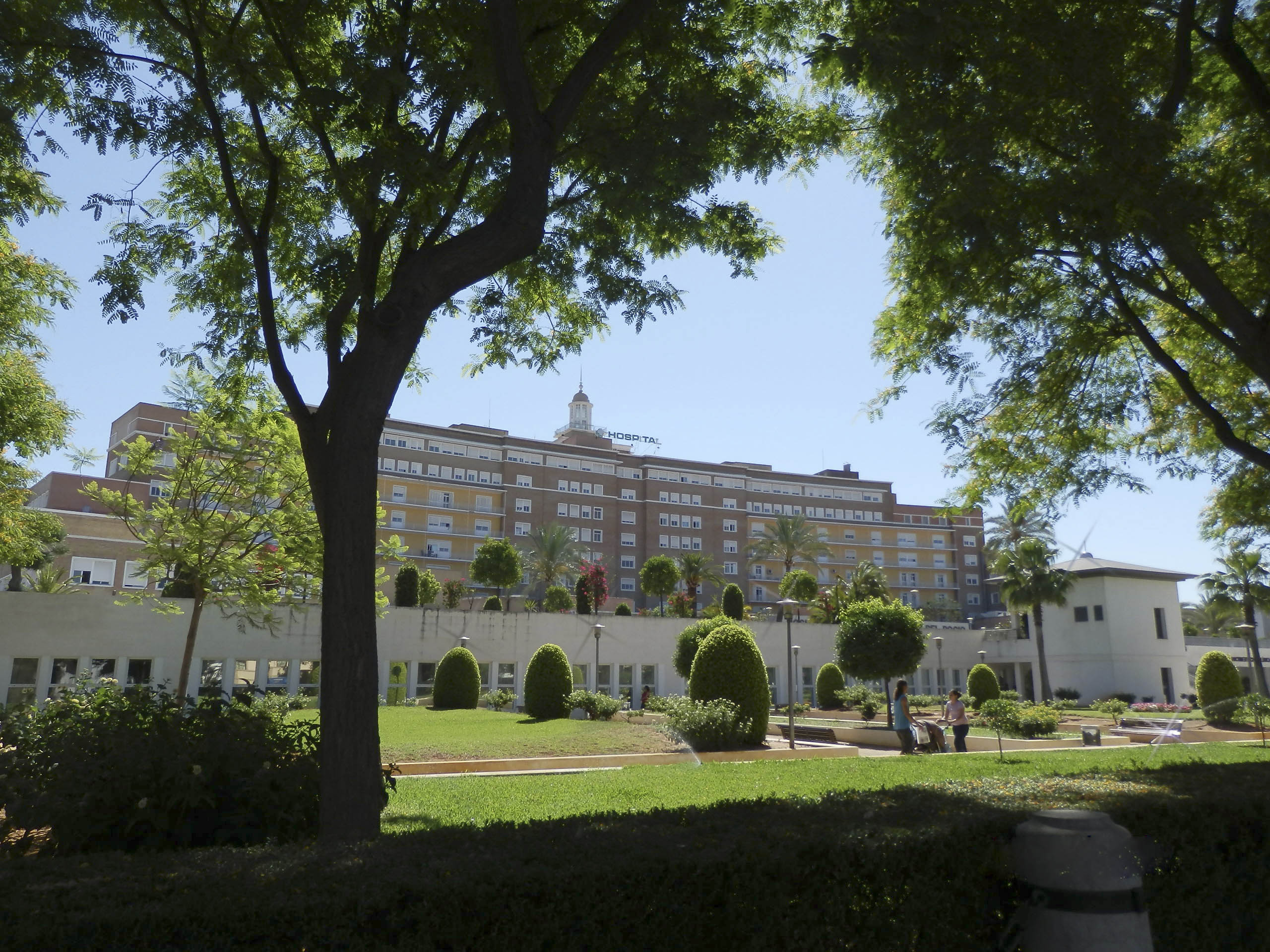
The Unit of the Virgen del Rocío-IBiS University Hospital of the Biobank of the Public Health System of Andalusia (SSPA) is located in the city of Seville. The unit can be found at the Clinical Management Unit of Pathological Anatomy of the Virgen del Rocío University Hospital (HUVR).
This unit of the Biobank network previously was part of the Network of Tumour Banks of Andalusia. Since January 2013, it has been a unit of the Biobank of the Public Health System of Andalusia (SSPA).
Being integrated into the UGC of Pathological Anatomy allows the unit to share infrastructure facilities with the hospital and increase its support to the research community. The unit achieves this by promoting rapid response times facilitated by direct and face-to-face communication with professionals specialized in various fields, offering access to a wide range of samples or data (under the protection of current biomedical legislation), and enabling the adjustment of rates to the benefit of the researcher.
Infrastructure
The Biobank Unit at the Virgen del Rocío-IBiS University Hospital (Institute of Biomedicine of Seville) has an area for the preservation and conservation of biological samples and an office space for the entry, registration, and processing of samples on the ground floor of the UGC of Pathological Anatomy at the hospital.
Professional staff
The Biobank Unit currently employs five full-time professionals for the development of its activities, in addition to the Unit Director, who is also the director of the provincial unit linked to the Andalusian Health Service (SAS).
Activities
The Biobank Unit at the Virgen del Rocío-IBiS University Hospital offers scientific advice to researchers and manages research projects related to different pathologies. In addition, the participates in networked projects in which different units of the Biobank network participate, including the transfer of bioresources. The Biobank Unit also distributes bioresources of different types (serum, plasma, tissue, for example.) with their associated clinical data, in accordance with current legislation.
Currently, different collection programs are running to collect fresh tissue samples from different hospital UGCs (from thoracic surgery, coloproctology, oncopaediatric surgery, neurosurgery, and endocrine surgery). The following three domains deserve further description because of their uniqueness:
- Hepatobiliary surgery: in this area, collection of samples takes place from liver transplants using the "Tissue Safe" system, which ensures the preservation of fresh samples for up to 72 hours by virtue of a combination of applying a vacuum at low temperature (4oC).
- Oncotraumatological surgery: in this area, the collection of samples takes place from bone and soft tissue tumours for the generation of xenografts (PDXs) or 3D cultures for efficacy studies of drugs against cancer, among others.
- Thoracic, Oncopaediatric, and Neurosurgery, and Endocrine Surgery: in these areas, fresh samples are provided for cell cultures, and others are used in in vitro techniques.
Different UGCs at the Virgen del Rocío-IBiS University Hospital, including Medical Oncology, Radiation Oncology and Radiophysics (CSUR), Hematology, Digestive System, and Pediatric Oncology, function as reference units for conducting clinical trials. The UGC of Pathological Anatomy is a reference for the centralized histological review of these samples. In this context, the Biobank Unit at the Virgen del Rocío University Hospital manages the samples that are transferred and/or processed between the different agents (for example, reference centres for clinical trials and the Institute of Biomedicine of Seville (IBiS)).
This Biobank Unit offers researchers the possibility of constructing arrays of fixed and paraffin-embedded tissue (Tissue Microarray or TMA). In this line, the Biobank makes available to researchers complementary techniques, mainly immunohistochemistry (including antibody tuning), as well as a comparative pathology service, thereby increasing the number of samples that can be evaluated each year.
The HUVR-IBiS unit has participated in the preparation of the national quality controls related to the modules of breast pathology (the Breast Panel) since 2015 and molecular pathology (EGFR mutations) since 2018 on behalf of the Spanish Society of Pathological Anatomy (SEAP).
Of special relevance is the unit’s participation in the international protocol Umbrella SIOP-RTSG 2016. The Virgen del Rocío Hospital is the central coordinating and pathological review centre at the national level for this protocol, while the HUVR-IBiS unit functions as the reference unit for the reception and storage of samples from participating Spanish centres. The unit also collaborated in the clinical trial "ESP1/SARC025 Global Collaboration" of the American Sarcoma Foundation, as well as with the European project "CGI-Clinics", HORIZON-HLTH-2021-CARE-05.
Also noteworthy is the unit’s collaboration in establishing and developing the platform used in PDXs models of CIBERONC (work module WM5 – experimental models).
In close collaboration with CTTC Sevilla, the HUVR-IBiS Biobank Unit performs document management and manages the traceability of the samples delivered from the CTTC Sevilla for different projects and teaching purposes.
Collections
In addition to its active sample collection programs, the Biobank Unit at the Virgen del Rocío-IBiS University Hospital has a total of 24 integrated collections from 2013 to the present. The collections include samples of pathologies as diverse as neurodegenerative, infectious, pulmonary, ICTUS, transplants, cancer, blood diseases, and digestive diseases.
Dissemination of information
Dissemination is an activity that has been developed by the Biobank Unit at the Virgen del Rocío-IBiS University Hospital. In recent years, the unit has participated in information dissemination events such as the European Researchers' Night, Coffee with Science, and Science Week, for example. The unit has provided talks at several educational centres in the province to inform young people about aspects related to research. The unit has conducted several clinical sessions focused on providing advice and support at a technical and scientific level to healthcare professionals. One of the objectives of the SSPA Biobank is to make its scientific field and research activities known to the general public. Consequently, we consider our participation in such informative activities particularly important.
Node location map:
Biobanco
----